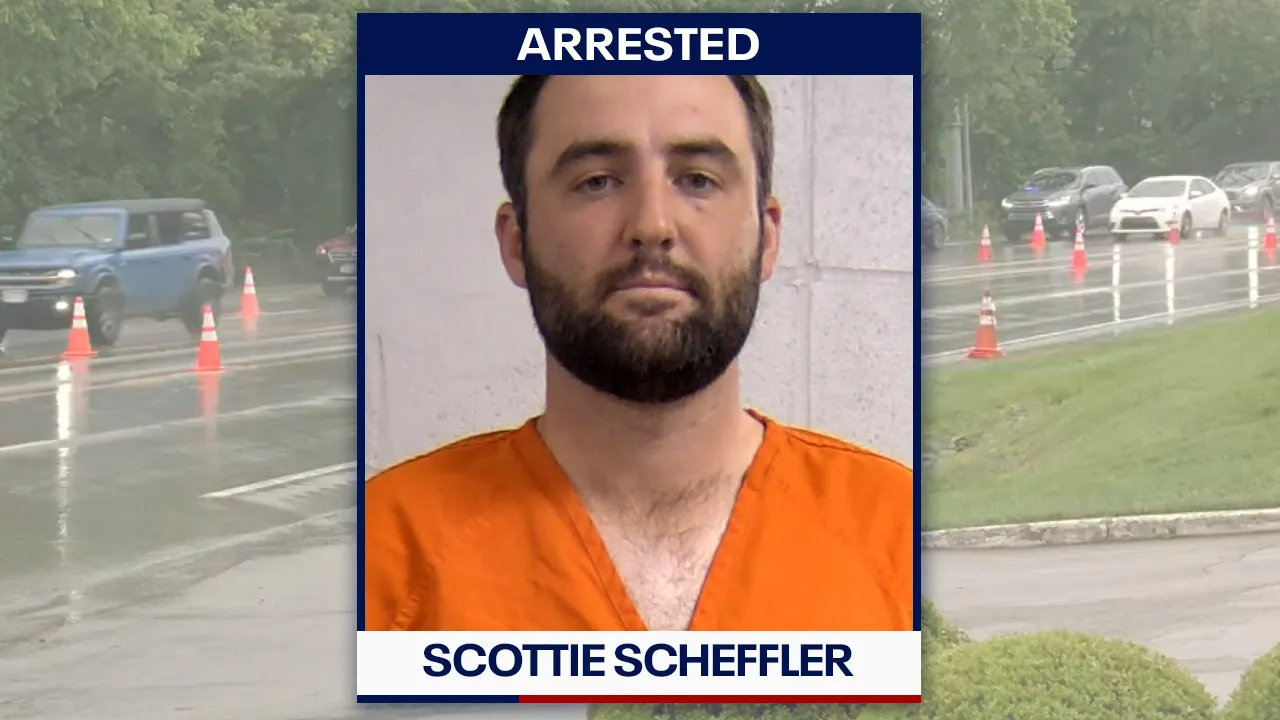
The city of Louisville finds itself under scrutiny as key details surrounding the arrest of the world’s No. 1 golfer, Scottie Scheffler, remain shrouded in uncertainty. The incident in question unfolded when Louisville Metro Police Detective Bryan Gillis arrested Scheffler. Mayor Craig Greenberg confirmed Saturday morning that there is no body camera footage of the incident.
“The officer did not have body cam footage turned on during the incident,” Mayor Greenberg stated, emphasizing the lack of primary video evidence. “We will release footage that we have … to my knowledge, we have not yet discovered any video of the initial contact between Officer Gillis and Mr. Scheffler.” As the search for complete transparency continues, the absence of this footage leaves a significant gap in understanding what transpired during the arrest.
Scheffler’s arrest, which occurred early Friday morning, led to charges including second-degree assault, third-degree criminal mischief, reckless driving, and disregarding signals from an officer directing traffic. These charges paint a dramatic picture of the encounter that led to his detention and subsequent booking into Metro Corrections. However, Scheffler has since downplayed the situation, calling it a “big misunderstanding,” and he notably returned to the tournament later the same day.
The arrest has provoked a mix of reactions and speculations, both within the sports community and among the general public. Several fans and analysts have pointed to the importance of body camera footage as a means to ensure accountability and clear up any ambiguities related to police conduct. The void left by the absence of video evidence thus casts a shadow over the entire incident.
It’s worth noting that, while body camera footage is missing, Mayor Greenberg disclosed that a fixed camera was positioned across the street during the arrest, which offers a glimmer of hope for gaining some visual insight into the situation. The footage from this fixed camera is expected to be released in the coming days, potentially providing a clearer narrative of the events that led to Scheffler’s arrest.
However, beyond mentioning the fixed camera, Mayor Greenberg was reticent to provide further details on the ongoing case. He declined to comment on whether discussions are being held regarding the possibility of dismissing or reducing the charges against Scheffler, maintaining that the legal process remains firmly in the hands of the county attorney. “Right now, the case is in the hands of our county attorney, and I will let the legal process play out,” Mayor Greenberg stated, signaling trust in the judicial proceedings.
The incident also incites a larger conversation about the policies and practices surrounding body camera usage among police officers. The absence of body camera footage during critical interactions, such as the arrest of a high-profile individual, brings to the forefront questions about compliance with protocols meant to ensure transparency and accountability in law enforcement.
In the wake of the arrest, news organizations have worked diligently to piece together the events. Sports reporters Alexis Cubit, Ryan Black, and Brooks Holton, along with watchdog reporter Josh Wood, contributed to unraveling the story, striving to provide a comprehensive account even in the absence of direct visual evidence. The concern among fans and sports reporters alike is palpable, with many wondering how this incident might affect Scheffler’s career and the ongoing PGA tournament.
As of now, the sports community and the public at large await further updates, particularly the anticipated release of the fixed camera footage. The potential insights from the footage could either substantiate or contradict the accounts given thus far, making it a pivotal element in the unfolding narrative.
While the case continues to develop, it underscores the critical importance of body cameras and other surveillance measures in modern policing. These tools are not just pivotal in ensuring accountability but also in protecting the rights of all parties involved during police encounters.
The arrest of Scottie Scheffler serves as a potent reminder of the intricacies and potential pitfalls in law enforcement procedures and the high stakes involved in maintaining public trust and transparency. As more information becomes available, it remains to be seen how this case will influence broader discussions on police practices and the implementation of body cameras.
For now, observers and stakeholders will have to wait patiently for the release of the fixed camera footage and any other forthcoming updates from authorities, all while keeping a keen eye on the legal journey that lies ahead for Scottie Scheffler.